Brand
Hysteric Glamour
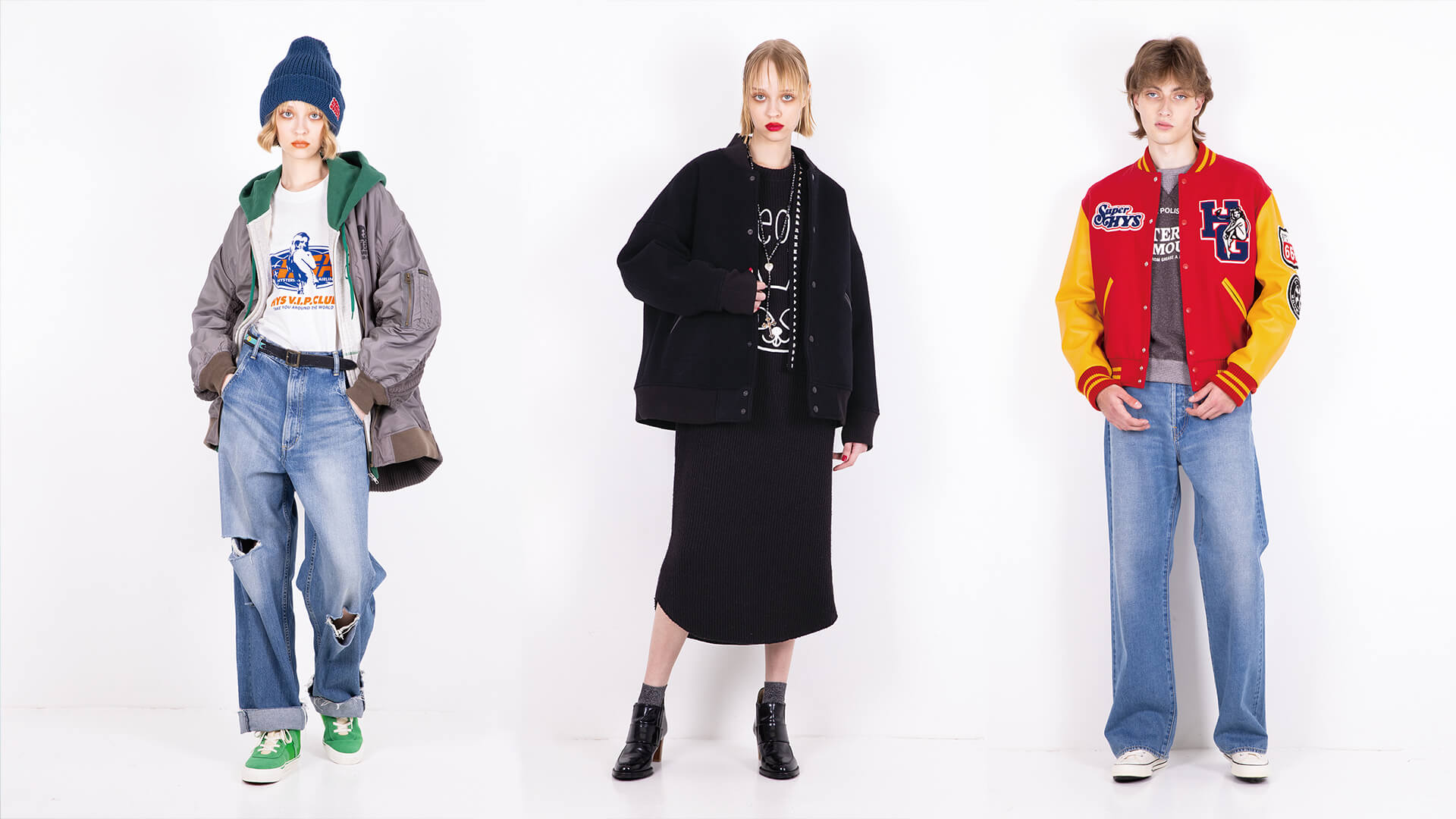
Punk-infused Vintage Americana
Hysteric Glamour is a Japanese fashion label founded in 1984 by Nobuhiko Kitamura. Ever since its founding, the brand has been characterized by a countercultural street style. Back then, the pieces were a symbol of anti-fashion, and even today they feature band and comic book motifs, cars, and other symbols of 1960s mass media. Since the 1980s, Japan has been considered a hotspot for innovative street fashion thanks to brands like BAPE and NEIGHBORHOOD, and Hysteric Glamour is also part of this movement.
Kitamura was born in Tokyo in 1962 and developed a passion for the Western music genres of new wave and punk at an early age. The designer studied fashion design at the Tokyo Mode Gakuin Fashion School and subsequently began working for a young label called Ozone Community. At that time, a counter-movement to the ostentatious styles of the 1980s was emerging, as punk and rock music had a major influence on young people’s clothing styles. The fashion was an expression of resistance against the norm, drew inspiration from Western subcultures, and was deliberately rebellious. Encouraged by his employer, Nobuhiko Kitamura decided to launch his own unisex label, and thus Hysteric Glamour was born.
After the Japanese women’s magazine Olive featured the label, it quickly became well-known throughout Japan. What is now established as street fashion was a fresh novelty in the country at the time, and Hysteric Glamour enjoyed great success with the sale of baggy shirts featuring provocative motifs, baseball caps, and hoodies. Kitamura created a new aesthetic, drawing inspiration primarily from the artist Andy Warhol. In an interview with Nylon magazine in 2007, he said: “When I was just starting out, there was no one else doing what I was doing. I had no experience and no teacher, so I just read books. I had this book on Warhol’s philosophy and his jokes, and it was a great reference (...).” Although he never got to meet his idol in person, Kitamura collaborated with Warhol’s foundation after his death and designed several garments in his honor.
To this day, Warhol’s influences are evident in Hysteric Glamour’s collections. Other key elements and sources of inspiration for the brand’s designs include 1970s pornography, anti-establishment punk slogans, indie comics, psychedelic patterns, and skulls. The looks are unconventional, colorful, and flashy—and embody a conscious defiance of the mainstream. Long before this aesthetic became an integral part of street fashion, Kitamura was deeply engaged with it. Humor and self-irony in fashion are also particularly important to him. Even today, nearly 40 years after the brand’s founding, he continues to work on modern and artistic projects—always with the conviction that everything must feel right for him and his brand.
Hysteric Glamour beschreibt sich selbst als eine Marke, die auf klassischem amerikanischem Casual-Style basiert – insbesondere auf Denim, Military, Workwear und Outdoor-Bekleidung. Die Marke kombiniert diese Basis mit amerikanischer Popkultur der 60er bis 80er Jahre und übersetzt sie in ihre Kollektionen. Typische Inspirationen sind Rockmusik, Kunst, Vintage-Werbung und die Ästhetik alter Massenprodukte. Dabei geht es nicht nur um das Reproduzieren vergangener Stile, sondern um eine Neuinterpretation, die durch innovative Materialien und moderne Produktionstechniken ergänzt wird.
Neben den auffälligen Prints und ikonischen Schriftzügen ist Hysteric Glamour besonders für seine sorgfältige Materialwahl bekannt. Die Marke forscht intensiv an Stoffen und Herstellungsprozessen, um eine authentische Qualität zu gewährleisten. Während viele Motive und Silhouetten auf Vintage-Ästhetik basieren, werden gleichzeitig neueste Technologien eingesetzt, um die Stoffe widerstandsfähiger und funktionaler zu machen.
Hysteric Glamour betreibt in Japan über 20 Stores und ist auch online erhältlich. Neben den Damen- und Herrenkollektionen führt die Marke eine Kinderlinie unter dem Namen Joey Hysteric. Zudem hatte Hysteric Glamour für zwei Jahre einen Store im New Yorker East Village. Das Sortiment ist breit gefächert und reicht von Streetwear über Taschen und Loungewear bis hin zu Accessoires wie Handyhüllen oder sogar Einrichtungselementen. Die Designs haben einen ausgeprägten Retro-Charakter, sind oft mit großen bunten Motiven und Schriftzügen versehen und spielen mit Nostalgie und Provokation.
Hysteric Glamour hat in den letzten Jahren mit zahlreichen KünstlerInnen, MusikerInnen und großen Marken zusammengearbeitet. Kitamura traf auf Ikonen wie Iggy Pop oder Patti Smith, die zu wichtigen Inspirationen für seine Entwürfe wurden. Die Marke wird sogar in dem Song Harajuku Girls von Gwen Stefani erwähnt. Eine langjährige Kollaboration besteht seit 2013 mit dem Playboy-Magazin – dessen ikonische Grafiken finden sich bis heute auf Shirts, Socken und anderen Pieces der Marke.
2009 veröffentlichte Hysteric Glamour gemeinsam mit Globe-Trotter eine von Warhol inspirierte Gepäckkollektion. Doch eine der größten Kollaborationen, die unterstrich, dass Hysteric Glamour nach wie vor ein bedeutender Player in der Street-Fashion-Szene ist, fand 2017 und 2021 mit Supreme statt. Beide Kollektionen waren knallig, rebellisch und voller provokanter Slogans. Die zweite Supreme x Hysteric Glamour-Kollektion enthielt unter anderem blaue Leopardenmäntel mit rotem Branding auf dem Rücken, dicke Strickjacken mit Reißverschluss und den Worten „ANARCHY“, „WORLD FAMOUS“ sowie einem großflächigen „FUCK 'EM“-Print. Dazu kamen karierte Hemden, Velours-Trainingshosen, Bucket Hats, Jeansjacken, Schlangenmuster und auffällige Hosen. Beide Drops waren in kürzester Zeit ausverkauft und zeigten, dass Hysteric Glamour immer noch ein hohes Ansehen in der Streetwear-Szene genießt.
Weitere Kollaborationen gab es mit Vans, Converse, Our Legacy, Casio und Mulberry. Hysteric Glamour hat sich über die Jahrzehnte hinweg als Kultlabel etabliert und gilt heute als einer der OGs der Street-Fashion. Die Anti-Establishment-Attitüde und die provokanten Designs trafen und treffen den Zeitgeist. Viele Menschen wollen sich abgrenzen, provozieren und sich von der Masse unterscheiden – Hysteric Glamour hat genau diese Energie seit jeher verkörpert.
Selected stores